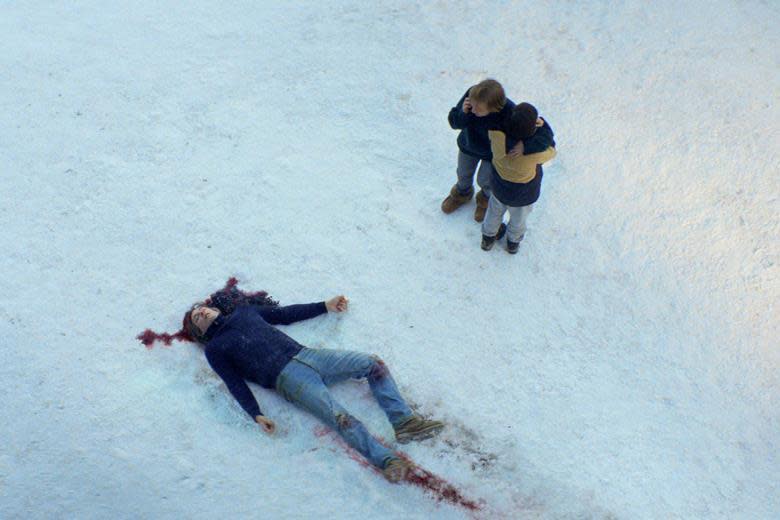
With Yorgos Lanthimos’ Poor Things winning the Golden Lion a couple days back, it has cemented itself as a top 6 Best Picture contender. High-profile films like Maestro and Ferrari were shutout, while films like Priscilla, Evil Does Not Exist, El Conde, and Memory all won major awards. Of these films, however, other than Poor Things, I think Maestro is the only film that will end up earning a Best Picture nod. It’s the type of major studio distributed film backed by big stars that does not need as much festival acclaim as indie films like Memory and Evil Does Not Exist do.
Poor Things should follow the trajectory of films like The Shape of Water, Roma, Joker, and Nomadland, all films that won the Golden Lion at Venice and ended up translating that into becoming top five Best Picture contenders in their respective years.
Here are the rest of the Venice winners.
Golden Lion Poor Things, Yorgos Lanthimos
Silver Lion Grand Jury Prize Evil Does Not Exist, Ryusuke Hamaguchi
Silver Lion Best Director Matteo Garrone, Io Capitano
Special Jury Prize Green Border, Agnieszka Holland
Best Screenplay Pablo Larrain and Guillermo Calderón, El Conde
Best Actress Cailee Spaeny, Priscilla
Best Actor Peter Sarsgaard, Memory
Marcello Mastroianni Award for Best New Young Actor or Actress Seydou Sarr, Io Capitano
HORIZONS Best Film Explanation For Everything, Gábor Reisz
Best Director Mika Gustafson, Paradise Is Burning
Special Jury Prize Una Sterminata Domenica, Alain Parroni
Best Actress Margarita Rosa De Francisco, El Paraiso
Best Actor Tergel Bold-Erdene, City of Wind
Best Screenplay El Paraiso, Enrico Maria Artale
Best Short Film A Short Trip, Erenik Beqiri
Lion of the Future – Luigi De Laurentiis Award for a Debut Film Love Is A Gun, Lee Hong-Chi
HORIZONS EXTRA Audience Award FELICITÀ (HAPPINESS), Micaela Ramazzotti
VENICE CLASSICS
Best Documentary Thank You Very Much, Alex Braverman
Best Restored Film OHIKKOSHI (MOVING), Shinji Somai
VENICE IMMERSIVE
Grand Jury Prize Songs For A Passerby, Celine Daemen
Special Jury Prize Flow, Adriaan Lokman
Immersive Achievement Prize Emperor, Marion Burger, Ilan Cohen
With Denis Villeneuve’s Dune: Part Two now having moved to March of next year, Oppenheimer will now be essentially unchallenged as this year’s tech giant. Categories like Sound, Score, and Editing already seem like Oppenheimer’s for the taking. Visual Effects, Production Design, and Cinematography are very likely places it will get nominated as well. The last few weeks have been the era of Barbenheimer and I think it’s likely that these massive box office and critical successes will both make it into Best Picture. Both Barbie and Oppenheimer feel like major contenders right now and seem poised for multiple above-the-line nominations respectively.
The three most important fall festivals of the season, Venice, Telluride, and Toronto, begin in less than a week. Judging from past results, at least half of the eventual Best Picture nominees will have played at least one of these festivals. I think it’s very likely that one or two films I haven’t even considered yet will play incredibly well at one of these fests and force itself into the Best Picture race. But until then, here are my pre-festival season Oscar predictions.
BEST PICTURE
Killers of the Flower Moon (Apple TV+)
Oppenheimer (Universal)
The Color Purple (Warner Bros.)
Barbie (Warner Bros.)
The Zone of Interest (A24)
Maestro (Netflix)
Past Lives (A24)
Poor Things (Searchlight)
Anatomy of a Fall (Neon)
Rustin (Netflix)
Could Jump In: Saltburn (Amazon), Spider-Man: Across the Spider-Verse (Sony), The Boy and the Heron (GKids), Ferrari (Neon), Napoleon (Apple TV+), Priscilla (A24), Origin (N/A), Lee (Sky), The Bikeriders (20th Century), Next Goal Wins (Searchlight), The Killer (Netflix), Monster (Toho), Asteroid City (Focus), A Thousand and One (Focus), The Holdovers (Focus), The Piano Lesson (Netflix), Wonka (Warner Bros.), Nyad (Netflix), May December (Netflix)
BEST DIRECTOR
Martin Scorsese – Killers of the Flower Moon
Jonathan Glazer – The Zone of Interest
Greta Gerwig – Barbie
Christopher Nolan – Oppenheimer
Blitz Bazawule – The Color Purple
Could Jump In: Justine Triet – Anatomy of a Fall, Celine Song – Past Lives, Yorgos Lanthimos – Poor Things, Emerald Fennell – Saltburn, Hayao Miyazaki – The Boy and the Heron, Ridley Scott – Napoleon, Jeff Nichols – The Bikeriders, Ellen Kuras – Lee, Michael Mann – Ferrari, David Fincher – The Killer, Greta Gerwig – Barbie, Ari Aster – Beau is Afraid, Todd Haynes – May December, George C. Wolfe – Rustin, Nuri Bilge Ceylan – About Dry Grasses
BEST ACTOR
Colman Domingo – Rustin
Bradley Cooper – Maestro
Cillian Murphy – Oppenheimer
Leonardo DiCaprio – Killers of the Flower Moon
Michael Fassbender – The Killer
Could Jump In: Paul Giamatti – The Holdovers, Adam Driver – Ferrari, Barry Keoghan – Saltburn, Joaquin Phoenix – Napoleon, Austin Butler – The Bikeriders, Anthony Hopkins – One Life, Christian Friedel – The Zone of Interest, Matt Damon – Air, Teo Yoo – Past Lives, Kingsley Ben-Adir – Bob Marley: One Love, David Strathairn – A Little Prayer, Andrew Scott – Strangers, Timothee Chalamet – Wonka, Andre Holland – The Actor,
BEST ACTRESS
Annette Bening – Nyad
Kate Winslet – Lee
Natalie Portman – May December
Sandra Huller – Anatomy of a Fall
Greta Lee – Past Lives
Could Jump In: Carey Mulligan – Maestro, Fantasia Barrino – The Color Purple, Emma Stone – Poor Things, Margot Robbie – Barbie, Vanessa Kirby – Napoleon, Teyana Taylor – A Thousand and One, Alicia Vikander – Firebrand, Saoirse Ronan – The Outrun, Jessica Chastain – Memory, Sandra Huller – The Zone of Interest
BEST SUPPORTING ACTOR
Robert De Niro – Killers of the Flower Moon
Robert Downey Jr. – Oppenheimer
Colman Domingo – The Color Purple
John Magaro – Past Lives
Jesse Plemons – Killers of the Flower Moon
Could Jump In: Ryan Gosling – Barbie, Tom Hardy – The Bikeriders, Willem Dafoe – Poor Things, Samuel L. Jackson – The Piano Lesson, Glynn Turman or Jeffrey Wright – Rustin, Louis Gossett Jr. – The Color Purple, Richard E. Grant – Saltburn, Lakeith Stanfield – The Book of Clarence, Andy Samberg – Lee, Paul Mescal – Strangers, Peter Sarsgaard – Memory, Jude Law – Firebrand, Mahershala Ali – Leave the World Behind, Glenn Howerton – BlackBerry (I can hope)
BEST SUPPORTING ACTRESS
Lily Gladstone – Killers of the Flower Moon
Taraji P. Henson – The Color Purple
Danielle Brooks – The Color Purple,
Julianne Moore – May December
Emily Blunt – Oppenheimer
Could Jump In: Rosamund Pike – Saltburn, Jodie Foster – Nyad, Tilda Swinton – The Killer, Viola Davis – Air, Jodie Comer – The Bikeriders, Penelope Cruz – Ferrari, Audra McDonald – Rustin, Claire Foy – Strangers, Margaret Qualley – Poor Things, Carey Mulligan – Saltburn, Helena Bonham Carter – One Life, Da’vine Joy Randolph – The Holdovers
BEST ORIGINAL SCREENPLAY
Past Lives
Saltburn
Drive-Away Dolls
May December
Barbie
Could Jump In: Maestro, Rustin, Asteroid City, The Holdovers, Beau is Afraid, Monster
BEST ADAPTED SCREENPLAY
Killers of the Flower Moon
Poor Things
The Bikeriders
Oppenheimer
The Zone of Interest
Could Jump In: The Color Purple, The Boy and the Heron, Strangers, Lee
BEST ANIMATED FEATURE
Spider-Man: Across the Spider-Verse
The Boy and the Heron
Elemental
Wish
Teenage Mutant Ninja Turtles: Mutant Mayhem
Could Jump In: Migration, Suzume
BEST PRODUCTION DESIGN
Poor Things
Barbie
Saltburn
Oppenheimer
Napoleon
Could Jump In: Killers of the Flower Moon, The Color Purple, Wonka, The Zone of Interest,
BEST CINEMATOGRAPHY
Killers of the Flower Moon
Saltburn
Poor Things
Oppenheimer
Maestro
Could Jump In: Napoleon, The Color Purple, The Killer, The Zone of Interest
BEST COSTUME DESIGN
Poor Things
Saltburn
The Color Purple
Barbie
Wonka
Could Jump In: Napoleon, Wonka, Blitz, Lee
BEST FILM EDITING
Killers of the Flower Moon
Oppenheimer
The Killer
Ferrari
Barbie
Could Jump In: The Color Purple, Napoleon, Blitz, Maestro, Poor Things
BEST MAKEUP & HAIRSTYLING
Barbie
Maestro
Poor Things
Wonka
The Color Purple
Could Jump In: Ferrari, Napoleon, The Bikeriders
BEST SOUND
Oppenheimer
Ferrari
The Color Purple
Maestro
Napoleon
Could Jump In: Mission: Impossible – Dead Reckoning Part One, Wonka, The Marvels. Barbie
BEST VISUAL EFFECTS
Oppenheimer
Transformers: Rise of the Beasts
Guardians of the Galaxy Vol. 3
The Marvels
Wonka
Could Jump In: Barbie, The Little Mermaid, Indiana Jones and the Dial of Destiny, Blue Beetle
BEST ORIGINAL SCORE
Oppenheimer
The Boy and the Heron
The Killer
Asteroid City
The Zone of Interest
Could Jump In: Napoleon, Elemental, Barbie, Past Lives, Lee, Killers of the Flower Moon, White Bird, Nyad, Ferrari
2023 is poised to be a strange year for film festivals. With the SAG-AFTRA and WGA strikes showing no signs of stopping, many of these films’ stars will be absent at the festivals. Both festivals will run as planned even without many of their films’ A-list talent showing up. Actors campaigning for their films has always had a large impact on their film’s Oscar chances and more significantly on their chances at acting awards. It will be interesting to see how that changes this year.
‘Maestro’ (Netflix)
VENICE
The lineup for this year’s Venice Film Festival was just announced. This is the first major festival lineup announcement of the Oscar season and it gives us our first introductory look at this year’s possible contenders. In six of the past seven years, a top two Picture contender has played at Venice and this trend shows no signs of stopping.
In my predictions from this month, I have two of the films that have shown up in the Venice lineup in the top 10: Bradley Cooper’s Maestro and Yorgos Lanthimos’ Poor Things. However, Sofia Coppola’s Priscilla, Ava DuVernay’s Origin, Michael Mann’s Ferrari, Ryusuke Hamguchi’s Evil Does Not Exist, David Fincher’s The Killer, Michel Franco’s Memory, Pablo Larrain’s El Conde, and Matteo Garrone’s Io Capitano should also be watched. If any one of these ten films leave Venice highly-acclaimed and/or win one of their top prizes, their chances of being a Best Picture contender expand greatly. While I’m not confident that any of these films will become a top 2 Best Picture contender this season, I’m essentially guaranteeing that one of them will end up being a top 5 contender.
Anyways, here is the Venice slate:
Competition
Comandante, dir: Edoardo de Angelis (opening night film)
Adagio, dir: Stefano Sollima La Bête, dir: Bertrand Bonello DogMan, dir: Luc Besson El Conde, dir: Pablo Larrain Enea, dir: Pietro Castellitto Evil Does Not Exist, Ryusuke Hamaguchi Ferrari, dir: Michael Mann Finalmente L’Alba, dir: Saverio Costanzo The Green Border, dir: Agnieszka Holland Holly, dir: Fien Troch Hors-Saison, dir: Stéphane Brizé Io Capitano, dir: Matteo Garrone The Killer, dir: David Fincher Lubo, dir: Giorgio Diritti Maestro, dir: Bradley Cooper Memory, dir: Michel Franco Origin, dir: Ava DuVernay Poor Things, dir: Yorgos Lanthimos Priscilla, dir: Sofia Coppola The Promised Land, dir: Nikolaj Arcel Die Theorie Von Allem, dir: Timm Kroger Woman Of, dirs: Malgorzata Szumowska, Michal Englert
Out of Competition
Fiction
Aggro Dr1ft, dir: Harmony Korine The Caine Mutiny Court-Martial, dir: William Friedkin Coup de Chance, dir: Woody Allen Daaaaaal!, dir: Quentin Dupieux Hit Man, dir: Richard Linklater L’Ordine del Tempo, dir: Liliana Cavani The Palace, dir: Roman Polanski The Penitent, dir: Luca Barbareschi Snow Leopard, dir: Pema Tseden Vivants, dir: Alix Delaporte The Wonderful Story of Henry Sugar, dir: Wes Anderson (short)
Here are the Best Picture nominees that went to Venice from the past 7 years:
2022 – In Competition: Tar (Best Actress winner), The Banshees of Inisherin (Best Actor and Best Screenplay winner)
2021 – In Competition: The Power of the Dog (Silver Lion winner); Out of Competition: Dune
2020 – In Competition: Nomadland (Golden Lion winner)
2019 – In Competition: Joker (Golden Lion winner), Marriage Story
2018 – In Competition: The Favourite (Grand Jury Prize and Best Actress winner), Roma (Golden Lion winner); Out of Competition: A Star is Born
2017 – In Competition: The Shape of Water (Golden Lion winner), Three Billboard Outside Ebbing, Missouri (Best Screenplay winner)
2016 – In Competition: Arrival, La La Land (Best Actress winner); Out of Competition: Hacksaw Ridge
Based on this, it would be reasonable to suspect that at least two fiction films from this year’s in competition and out of competition slates will make it in Best Picture. I don’t really see anything from the out of competition slate becoming a Picture contender but in terms of likelihood, the films from the competition slate that I think have a best chance of receiving a Picture nomination are, Maestro, Poor Things, Origin, Priscilla, Ferrari, The Killer, and Evil Doesn’t Exist. If DuVernay’s Origin is highly-acclaimed, I can see that film being a possible Picture winner. The film tackles historical systemic racism in the United States and could very well be the kind of accessible socially-conscious cinematic lightning rod the Academy would want to support if it ends up being very good. If the film is near the quality and raw strength of previous Duvernay projects When They See Us and 13th, I think we might have our Best Picture winner.
Here is the rest of the Venice slate:
Short (Out of Competition)
Welcome to Paradise, dir: Leonardo Di Costanzo
Non-Fiction (Out of Competition)
Amor, dir: Virginia Eleuteri Serpieri Enzo Jannacci Vengo Anch’io, dir: Giorgio Verdelli Frente a Guernica (Version Integrale), dirs: Yervant Gianikian, Angela Ricci Lucchi Hollywoodgate, dir: Ibrahim Nash’at Menus Plaisirs – Les Troisgros, dir: Frederick Wiseman Ryuichi Sakamoto Opus, dir: Neo Sora
Series (Out of Competition)
D’Argent et de Sang (episodes 1-12), dirs: Xavier Giannoli, Frederic Planchon I Know Your Soul (episodes 1-2), dirs: Alen Drljevic, Nermin Hamzagic
Special Screening
La Parte del Leone: Una Storia della Mostra, dirs: Baptiste Etchegary, Guiseppe Bucchi
Horizons
En Attendant la Nuit, dir: Céline Rouzet Behind the Mountains, dir: Mohamed Ben Attia A Cielo Abierto, dirs: Mariana Arriaga, Santiago Arriaga City of Wind, dir: Lkhagvadulam Purev-Ochir Dormitory, dir: Nehir Tuna El Paraiso, dir: Enrico Maria Artale Explanation for Everything, dir: Gabor Reisz The Featherweight, dir: Robert Kolodny Gasoline Rainbow, dirs: Bill Ross, Turner Ross Heartless, dirs: Nara Normande, Tiao Hesitation Wound, dir: Selman Nacar Housekeeping for Beginners, dir: Goran Stolevski Invelle, dir: Simone Massi Paradise Is Burning, dir: Mika Gustafson The Red Suitcase, dir: Fidel Devkota Shadow of Fire, dir: Shinya Tsukamoto Una Sterminata Domenica, dir: Alain Perroni Tatami, dirs: Guy Nattiv, Zar Amir Ebrahimi
Horizons Extra
Bota Jone, dir: Luana Bajrami Day of the Fight, dir: Jack Huston Felicita, dir: Micaela Ramazzotti Forever Forever, dir: Anna Buryachkova L’Homme d’Argile, dir: Anais Tellenne In the Land of Saints and Sinners, dir: Robert Lorenz Pet Shop Boys, dir: Olmo Schnabel Stolen, dir: Karan Tejpal The Rescue, dir: Daniela Goggi
Venice Classics
Non-Fiction
Un Altra Italia Era Possibile, Il Cinema Di Guiseppe De Santis, dir: Stefano Della Casa Bill Douglas My Best Friend, dir: Jack Archer Dario Argento Panico, dir: Simone Scafidi Frank Capra: Mr America, dir: Matthew Wells Ken Jacobs From Orchard Street to the Museum of Modern Art, dir: Fred Riedel Le Film Pro-Nazi d’Hitchcock, dir: Daphne Baiwir Landrian, dir: Ernesto Daranas Serrano Michel Gondry Do It Yourself, dir: François Nemeta Thank You Very Much, dir: Alex Braverman
‘The Zone of Interest’ (A24)
TORONTO
In the last ten years, the eventual Best Picture winner has played at TIFF seven times. As a result, it has garnered a reputation as the most important festival in the Oscar race. Additionally, in the last 10 years, excluding the COVID year 2020, at least three films that screened at TIFF were nominated for Best Picture later that season. This year, Jonathan Glazer’s The Zone of Interest, Justine Triet’s Anatomy of a Fall, George C. Wolfe’s Rustin, Taika Waititi’s Next Goal Wins, Ellen Kuras’ Lee, Alexander Payne’s The Holdovers, Ladj Ly’s Les Indesirables, Alice Rohrwacher’s La Chimera, Hirokazu Koreeda’s Monster, Craig Gillespie’s Dumb Money, Christos Nikou’s Fingernails, Michel Franco’s Memory, Kristin Scott Thomas’ North Star, James Hawes’ One Life, Michael Winterbottom’s Shoshanna, Ethan Hawke’s Wildcat, and Atom Egoyan’s Seven Veils are some of the most high-profile films being shown.
Anyway, here is the Toronto slate:
Gala Presentations
Concrete Utopia, directed by Um Tae-Hwa
Dumb Money, directed by Craig Gillespie
Fair Play, directed by Chloe Domont
Flora and Son, directed by John Carney
Hate to Love: Nickelback, directed by Leigh Brooks
Lee, directed by Ellen Kuras
Next Goal Wins, directed by Taika Waititi
NYAD, directed by Elizabeth Chai Vasarhelyi and Jimmy Chin
Punjab ’95, directed by Honey Trehan
Solo, directed by Sophie Dupuis
The End We Start From, directed by Mahalia Belo
The Movie Emperor, directed by Ning Hao
The New Boy, directed by Warwick Thornton
The Royal Hotel, directed by Kitty Green
Special Presentations
A Difficult Year, directed by Éric Toledano and Olivier Nakache
A Normal Family, directed by Hur Jin-ho
American Fiction, directed by Cord Jefferson
Anatomy of a Fall, directed by Justine Triet
Close to You, directed by Dominic Savage
Days of Happiness, directed by Chloé Robichaud
El Rapto, directed by Daniela Goggi
Ezra, directed by Tony Goldwyn
Fingernails, directed by Christos Nikou
Four Daughters, directed by Kaouther Ben Hania
His Three Daughters, directed by Azazel Jacobs
Hitman, directed by Richard Linklater
In Restless Dreams: The Music of Paul Simon, directed by Alex Gibney
Kidnapped, directed by Marco Bellocchio
Knox Goes Away, directed by Michael Keaton
La Chimera, directed by Alice Rohrwacher
Last Summer, directed by Catherine Breillat
Les Indésirables, directed by Ladj Ly
Memory, directed by Michel Franco
Monster, directed by Kore-eda Hirokazu
Mother Couch, directed by Niclas Larsson
North Star, directed by Kristin Scott Thomas
One Life, directed by James Hawes
Pain Hustlers, directed by David Yates
Poolman, directed by Chris Pine
Reptile, directed by Grant Singer
Rustin, directed by George C. Wolfe
Seven Veils, directed by Atom Egoyan
Shoshana, directed by Michael Winterbottom
Sing Sing, directed by Greg Kwedar
Smugglers, directed by Ryoo Seung-wan
Swan Song, directed by Chelsea McMullan
The Beast, directed by Bertrand Bonello
The Burial, directed by Maggie Betts
The Convert, directed by Lee Tamahori
The Critic, directed by Anand Tucker
The Dead Don’t Hurt, directed by Viggo Mortensen
The Holdovers, directed by Alexander Payne
The Peasants, directed by DK Welchman and Hugh Welchman
The Zone of Interest, directed by Jonathan Glazer
Together 99, directed by Lukas Moodysson
Unicorns, directed by Sally El Hosaini and James Krishna Floyd
Uproar, directed by Paul Middleditch and Hamish Bennett
Wicked Little Letters, directed by Thea Sharrock
Wildcat, directed by Ethan Hawke
Woman of the Hour, directed by Anna Kendrick
Here are the Best Picture nominees that went to Toronto from the past 10 years:
2022 – Special Presentations: All Quiet on the Western Front, The Banshees of Inisherin, The Fabelmans, Triangle of Sadness, Women Talking
2021 – Gala Presentations: Belfast (People’s Choice Award 1st place); Special Presentations: Drive My Car, The Power of the Dog (People’s Choice Award 3rd place); Special Events: Dune
2020 – Gala Presentations: Nomadland (People’s Choice Award 1st place); Special Presentations: The Father
2019 – Gala Presentations: Ford v Ferrari, Joker; Special Presentations: Jojo Rabbit (People’s Choice award 1st place), Marriage Story (People’s Choice Award 2nd place), Parasite (People’s Choice Award 3rd place)
2018 – Gala Presentations: Green Book (People’s Choice Award 1st place), A Star is Born; Special Presentations: Roma (People’s Choice Award 3rd place)
2017 – Gala Presentations: Darkest Hour; Special Presentations: Call Me By Your Name (People’s Choice Award 3rd place), Lady Bird, The Shape of Water, Three Billboards Outside Ebbing, Missouri (People’s Choice Award 1st place)
2016 – Gala Presentations: Arrival; Special Presentations: La La Land (People’s Choice Award 1st place), Lion (People’s Choice Award 2nd place), Manchester by the Sea; Platform: Moonlight
2015 – Gala Presentations: The Martian; Special Presentations: Brooklyn, Room (People’s Choice Award winner), Spotlight (People’s Choice Award 3rd place)
2014 – Special Presentations: The Imitation Game (People’s Choice Award 1st place), The Theory of Everything, Whiplash
2013 – Special Presentations: 12 Years a Slave (People’s Choice Award 1st place), Dallas Buyers Club, Gravity, Philomena (People’s Choice Award 2nd place)
Based on this, I think it’s reasonable to expect that four to five of the films playing at TIFF will end up as Best Picture nominees. I’m not confident on whether this year’s Best Picture winner will play at TIFF, but history says that at least two of this year’s top five contenders will play at Toronto. In terms of likelihood, the films from the competition slate that I think have a best chance of receiving a Picture nomination are, The Zone of Interest, Anatomy of a Fall, Rustin, Lee, Next Goal Wins, Les Indesirables, and The Holdovers.
After over a year of anticipation, I have finally seen both Barbie and Oppenheimer. But before getting into those films and their awards prospects, let’s talk about some of the shakeups that have happened in the festival world in the last few weeks. Over at the New York Film Festival, Sofia Coppola’s Priscilla was announced as the festival’s centerpiece while Todd Haynes’ May December was announced earlier to be NYFF’s opening film. In four of the last five iterations of the festival, the Centerpiece film was nominated for Best Picture, with last year’s Best Documentary nominee All the Beauty and the Bloodshed being the exception. Will Priscilla continue this trend? Only time will tell but I personally doubt a film dealing with Elvis Presley gets nominated for Best Picture two years in a row. At Venice, Luca Guadagnino’s Zendaya-starrer Challengers was originally supposed to open the festival but the film is no longer premiering at Venice and its release date has been moved to next year due to the SAG-AFTRA strike. Venice’s new opening and closing films are not American productions, the opening feature being Edoardo de Angelis’ Comandante and the closing being J.A. Bayona’s Society of the Snow. As the major Hollywood studios are showing no signs of acquiescing to the demands of SAG and the WGA, the fall festivals will likely look very different this time around. Expect more shake-ups.
On to the Oscar chances of Barbie and Oppenheimer! Let’s start with Gerwig’s film. Barbie is poised to be a massive hit and with its combination of critical acclaim, social commentary, and beloved stars both in front and behind the camera, it very much has a chance of making it into Best Picture. The problem is that Warner Bros. has two major contenders this year other than Barbie, Dune: Part Two and The Color Purple. I doubt the studio will be able to get all three of its films in, but I won’t make a judgement on which one of the three will be left out until they’ve been seen. Other than a Picture nomination, Barbie is pretty much locked for nominations in Makeup and Hair, Costume Design, and Production Design. I think it’s pretty likely that Gerwig and Baumbach nab nods for Original Screenplay as well. In terms of acting nods, while I think a nomination for Margot Robbie in the titular role is possible, I wouldn’t bet on it.
Oppenheimer is going to be a top 5 Best Picture contender along with Killers of the Flower Moon. They are so far the closest to sure things when it comes to Picture nominations this year. Expect nominations for the film in Best Director, Actor, Supporting Actor, possibly Adapted Screenplay, Editing, Production Design, Cinematography, Sound, Visual Effects, and Original Score. Emily Blunt could be a contender in Supporting Actress depending on how strong the category is but her role fits very much inside the “long-suffering wife” trope and while she does have at least one fantastic scene, it will most likely not be enough to earn her a nomination.
BEST PICTURE
Killers of the Flower Moon (Apple TV+)
Oppenheimer (Universal)
The Color Purple (Warner Bros.)
Dune: Part Two (Warner Bros.)
Past Lives (A24)
The Zone of Interest (A24)
Maestro (Netflix)
Poor Things (Searchlight)
Saltburn (Amazon)
Anatomy of a Fall (Neon)
Could Jump In: Barbie (Warner Bros.), Spider-Man: Across the Spider-Verse (Sony), Rustin (Netflix), The Boy and the Heron (GKids), Napoleon (Apple TV+), Priscilla (A24), Lee (Sky), The Bikeriders (20th Century), The Wonderful Story of Henry Sugar (Netflix), Ferrari (STX), Shirley (Netflix), Next Goal Wins (Searchlight), The Killer (Netflix), Monster (Toho), Asteroid City (Focus), May December (Sky Cinema), A Thousand and One (Focus), The Holdovers (Focus), The Piano Lesson (Netflix), Wonka (Warner Bros.)
BEST DIRECTOR
Martin Scorsese – Killers of the Flower Moon
Blitz Bazawule – The Color Purple
Jonathan Glazer – The Zone of Interest
Celine Song – Past Lives
Christopher Nolan – Oppenheimer
Could Jump In: Yorgos Lanthimos – Poor Things Emerald Fennell – Saltburn, Denis Villeneuve – Dune: Part Two, Hayao Miyazaki – The Boy and the Heron, Ridley Scott – Napoleon, Jeff Nichols – The Bikeriders, Ellen Kuras – Lee, Michael Mann – Ferrari, David Fincher – The Killer, Greta Gerwig – Barbie, Ari Aster – Beau is Afraid, Wes Anderson – The Wonderful Story of Henry Sugar, Todd Haynes – May December, George C. Wolfe – Rustin, Nuri Bilge Ceylan – About Dry Grasses
BEST ACTOR
Colman Domingo – Rustin
Bradley Cooper – Maestro
Leonardo DiCaprio – Killers of the Flower Moon
Michael Fassbender – The Killer
Cillian Murphy – Oppenheimer
Could Jump In: Paul Giamatti – The Holdovers, Adam Driver – Ferrari, Barry Keoghan – Saltburn, Austin Butler – The Bikeriders, Benedict Cumberbatch – The Wonderful Story of Henry Sugar, Anthony Hopkins – One Life, Joaquin Phoenix – Beau is Afraid, Andre Holland – The Actor, Christian Friedel – The Zone of Interest, Matt Damon – Air, Song Kang-Ho – Cobweb, Andrew Scott – Strangers, Timothee Chalamet – Wonka
BEST ACTRESS
Annette Bening – Nyad
Kate Winslet – Lee
Natalie Portman – May December
Sandra Huller – Anatomy of a Fall
Greta Lee – Past Lives
Could Jump In: Regina King – Shirley, Carey Mulligan – Maestro, Fantasia Barrino – The Color Purple, Emma Stone – Poor Things, Margot Robbie – Barbie, Zendaya – Challengers, Vanessa Kirby – Napoleon, Teyana Taylor – A Thousand and One, Alicia Vikander – Firebrand, Saoirse Ronan – The Outrun, Jessica Chastain – Memory, Sandra Huller – The Zone of Interest
BEST SUPPORTING ACTOR
Robert De Niro – Killers of the Flower Moon
Robert Downey Jr. – Oppenheimer
Colman Domingo – The Color Purple
John Magaro – Past Lives
Jesse Plemons – Killers of the Flower Moon
Could Jump In: Tom Hardy – The Bikeriders, Willem Dafoe – Poor Things, Samuel L. Jackson – The Piano Lesson, Glynn Turman or Jeffrey Wright – Rustin, Louis Gossett Jr. – The Color Purple, Richard E. Grant – Saltburn, Lakeith Stanfield – The Book of Clarence, Andy Samberg – Lee, Paul Mescal – Strangers, Josh O’Connor or Mike Faist – Challengers, Peter Sarsgaard – Memory, Jude Law – Firebrand, Mahershala Ali – Leave the World Behind, Glenn Howerton – BlackBerry (I can hope)
BEST SUPPORTING ACTRESS
Lily Gladstone – Killers of the Flower Moon
Taraji P. Henson – The Color Purple
Danielle Brooks – The Color Purple,
Rosamund Pike – Saltburn
Julianne Moore – May December
Could Jump In: Jodie Foster – Nyad, Emily Blunt – Oppenheimer, Tilda Swinton – The Killer, Jodie Comer – The Bikeriders, Penelope Cruz – Ferrari, Audra McDonald – Rustin, Claire Foy – Strangers, Margaret Qualley – Poor Things, Carey Mulligan – Saltburn, Helena Bonham Carter – One Life
BEST ORIGINAL SCREENPLAY
Past Lives
Saltburn
Drive-Away Dolls
May December
Barbie
Could Jump In: Maestro, Rustin, Asteroid City, The Holdovers, Beau is Afraid, Monster
BEST ADAPTED SCREENPLAY
Killers of the Flower Moon
Poor Things
The Bikeriders
The Boy and the Heron
The Zone of Interest
Could Jump In: The Color Purple, Oppenheimer, The Wonderful Story of Henry Sugar, Strangers, Lee, Dune: Part Two
BEST ANIMATED FEATURE
Spider-Man: Across the Spider-Verse
The Boy and the Heron
Elemental
Wish
Teenage Mutant Ninja Turtles: Mutant Mayhem
Could Jump In: Migration, Suzume
BEST PRODUCTION DESIGN
Poor Things
Barbie
Dune: Part Two
Saltburn
Oppenheimer
Could Jump In: Napoleon, The Wonderful Story of Henry Sugar, Killers of the Flower Moon, The Color Purple, The Zone of Interest, Wonka,
BEST CINEMATOGRAPHY
Dune: Part Two
Killers of the Flower Moon
Saltburn
Poor Things
Oppenheimer
Could Jump In: Napoleon, The Color Purple, The Wonderful Story of Henry Sugar, Maestro, The Killer, The Zone of Interest
BEST COSTUME DESIGN
Dune: Part Two
Poor Things
Saltburn
The Color Purple
Barbie
Could Jump In: The Wonderful Story of Henry Sugar, Napoleon, Wonka, Blitz, Lee
BEST FILM EDITING
Dune: Part Two
Killers of the Flower Moon
Oppenheimer
The Killer
Ferrari
Could Jump In: The Color Purple, Napoleon, Blitz, Maestro, Poor Things
BEST MAKEUP & HAIRSTYLING
Maestro
Barbie
Dune: Part Two
Poor Things
Wonka
Could Jump In: The Color Purple, Ferrari, Napoleon, The Wonderful Story of Henry Sugar, The Bikeriders
BEST SOUND
Dune: Part Two
Oppenheimer
Ferrari
The Color Purple
Maestro
Could Jump In: Mission: Impossible – Dead Reckoning Part One, Wonka, The Marvels. Barbie
BEST VISUAL EFFECTS
Dune: Part Two
Transformers: Rise of the Beasts
Guardians of the Galaxy Vol. 3
Oppenheimer
Wonka
Could Jump In: Barbie, The Little Mermaid, The Marvels, Indiana Jones and the Dial of Destiny, Blue Beetle
BEST ORIGINAL SCORE
Oppenheimer
Dune: Part Two
The Boy and the Heron
The Killer
Asteroid City
Could Jump In: Elemental, The Zone of Interest, Barbie, Challengers, Lee, Killers of the Flower Moon
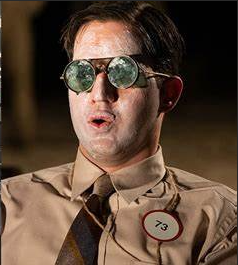
The bomb goes off. Total silence immediately takes control. A blinding light fills the desert, Oppenheimer and the rest of his team watch in awe as the flaming mushroom cloud slowly consumes the sky. It’s an image of destructive beauty. Director Christopher Nolan cuts between scientists’ faces, and at first, we see only awe, maybe with a tinge of fear. But then we cut to Edward Teller, watching the explosion with his dark safety glasses on, as his lips turn into a slight smile. This shot of the bespectacled Teller reveling in the cataclysmic power that he was an instrumental part of creating is etched in my mind. Due in large part because it reminded me of Peter Sellers’ titular character in Stanley Kubrick’s Dr. Strangelove: Or How I Learned to Stop Worrying and Love the Bomb. The glasses are definitely part of it, but the two characters also share this mad excitement at the might of nuclear power. In the Kubrick film, Dr. Strangelove is the American president’s scientific advisor, a former Nazi who betrays a certain excitement for the usage of nuclear weapons and particularly a doomsday nuclear device. Edward Teller himself is known as the “father of the hydrogen bomb” and received much support from the American government after the war for his plans to strengthen the American nuclear arsenal. He also was a major advocate of Reagan’s Strategic Defense Initiative, known colloquially as the Star Wars program, a proposed missile defense system that experimented with using lasers, satellites, and particle beam weapons to protect the United States. The similarities between Teller and Strangelove were quite noticeable but I still assumed that Nolan’s inclusion of that smiling shot was probably a coincidence. But then I discovered that Teller was an influence on the character of Strangelove in the 1964 film and now Teller’s wicked smile cannot leave my brain.
He looks so much like Dr. Strangelove. ‘Oppenheimer’ (Universal)
Oppenheimer is an incredibly well-made film. The technical aspects are phenomenal as is par for the course with pretty much every Nolan film. The practical visual effects from the team lead by Andrew Jackson, Scott R. Fisher, and Giacomo Mineo will most likely be Oscar-nominated. The spectacular cinematography and production design from Hoyte van Hoytema and Ruth de Jong, respectively will also very likely receive some Oscar love. But the technical aspect that astounded me the most about the film was Ludwig Goransson’s score. Like with Tenet, Goransson worked with Nolan as the composer on Oppenheimer as Nolan’s regular collaborator Hans Zimmer was busy working on Dune: Part Two (Zimmer wasn’t able to score Tenet due to being committed to Dune: Part One). Goransson’s ‘Tenet’ score was quite possibly the best thing about that film. It’s merger of electronic and classical instrumentation was alternatingly epic with an industrial sound and lush with its ambient soundscapes. Goransson’s work on Oppenheimer drops the industrial sound of his Tenet material but retains the epic feel, once again merging classical and ambient electronic instrumentation. Fluttering string arpeggios morph into pulsating synthesizers on the standout track “Can You Hear The Music” that plays near the start of the film. Like with Nolan’s best films (excluding Memento), the soundscapes that accompany them become integrally intertwined with the film’s content and do so much to drive the emotions of his work.
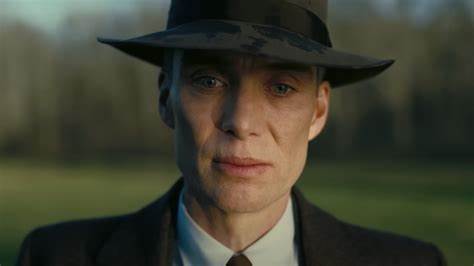
Cillian Murphy is incredible here. The film lives and dies on his performance and his portrayal of a deeply tortured, anxious man who is forced to present an image of control. He’s phenomenal and is absolutely deserving of all the attention he will likely receive in the coming months. When it comes to the supporting characters, Robert Downey Jr. is the undeniable standout as bureaucrat Lewis Strauss. He has some of the best scenes in the film, some shot in stunning black and white to indicate that it’s his perspective dictating what’s seen on screen (as opposed to the scenes in color which indicate that Oppenheimer’s perspective is being illustrated). A quick aside, the black and white moments in this film look gorgeous, the film becoming the first feature film to use black-and-white analog photography. Emily Blunt, Matt Damon, and Florence Pugh round out the main supporting cast. Unfortunately, Nolan’s problem with under developing female characters persists and while Blunt and Pugh both elevate the material they are given, their roles fall largely into common biopic tropes. Blunt is quite good as the long-suffering wife imploring her husband to fight back against the people attempting to ruin his reputation, and while she feels more “real” than Pugh’s character does, she is still woefully underwritten. Stars like Casey Affleck, Rami Malek, Kenneth Branagh, and Gary Oldman pop up for moments in this film, Affleck’s role as a menacing Commie-hating army officer being the most memorable of the four.
‘Oppenheimer’ (Universal)
Breakneck from the get-go, this undoubtedly is a Nolan movie, with the director’s characteristically propulsive brand of cinema grabbing you by the neck and refusing to let go until the credits run. Like with most Nolan films, the pacing and grandiose nature of the visuals and sonics distract you from paying too close attention to the dialogue. But luckily, unlike Interstellar, no lines are distractingly heavy-handed enough to take you out of the film’s immersion. This is the most political film Nolan has ever made and it’s surprisingly nuanced, something I was unsure the director could do when it came to politics. The film offers many of the prevalent perspectives on the war and the use of the atom bomb, keeping its position on the ramifications of Oppenheimer’s actions ambiguous until the knockout ending. This is one of the most grandiose-feeling films released in quite some time. It feels absolutely massive, the score, the sound, the effects, the pacing, all coming together to create a truly immersive experience. And while it’s so massive, the film is really a character study about one man. The man who became the American Prometheus. Someone so powerful, so deeply destructive with the force he worked so hard to unleash. In portraying Oppenheimer’s guilt, Nolan plays with style to force you inside the man’s tumultuous mind. Scenes like Oppenheimer’s post-Hiroshima speech end up being some of the film’s most chilling as a result of these stylizations.
Truly colossal in a litany of ways, Oppenheimer is Nolan’s best film since Inception and will undoubtedly end up being one of the year’s best blockbusters. Exhilarating and smarter than expected Oppenheimer both succeeds and suffers off of Nolan’s ambition, but the good definitely outweighs the bad. With Oppenheimer, Nolan can confidently silence those who doubted he could return to making box office hits after Tenet underperformed both critically and commercially. Nolan is clearly back, and I expect to see Oppenheimer rack up nominations and maybe a couple of wins come Oscar season.
How did Mattel allow this? The same company that sued Aqua for the group’s iconic 90s hit “Barbie Girl” for “trademark infringement, unfair competition, and trademark dilution”, allowed their beloved IP to be validly criticized and make hilarious quips about “beaching each other off” and their lack of genitals. Clearly, they’re a lot more lenient now, especially since that very Aqua song found its way into the film as the main sample for Nicki Minaj and Ice Spice’s track “Barbie World”. But what’s even more surprising is how Mattel is portrayed in the film. From the trailers, we already had a look at Will Ferrell as the CEO of Mattel, a company headed by a board room of men in matching, well-tailored suits. While the film doesn’t portray them as the undeniably evil corporation they could have, they are not positive characters. When Barbie enters the real world, the corporation reacts by trying to put her “back in her box”. And yes, that is a loaded phrase and if you already haven’t guessed it, this film has a lot more on its mind than many viewers might have imagined.
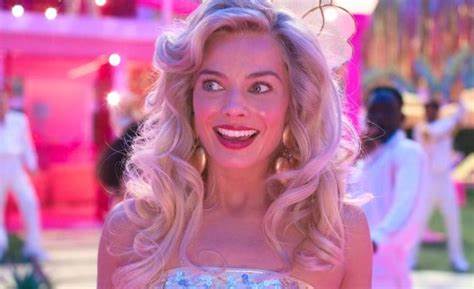
The scathing reviews from men like Ben Shapiro and Ted Cruz might’ve clued you in, but Barbie is a film about feminism, female solidarity, and existential questions. And the film still managed to have me giggling in the theater throughout. While director Greta Gerwig’s control of the tone isn’t perfect, it doesn’t leave too much to be desired. Serious poignancy and one-liners often come back-to-back but it hardly ever feels muddied. This is quite an ambitious film. There is a large swathe of thematic and narrative ground covered and while certain things (the mother/daughter subplot, some monologues) might come off as either underwritten or heavy-handed, the film is still affecting and does not lose sight of its emotional core. And that core is Margot Robbie in the titular role. She delivers a knockout performance, simultaneously managing to be absolutely hilarious while also imbuing the character with more depth and nuance than I could’ve ever hoped for in a movie about Barbie. She’s the beating heart of this film and adds to her repertoire of being one of the most talented stars working in Hollywood today. Ryan Gosling is also phenomenal, any questions about whether he was a good choice to play Ken should be completely dispelled. Gosling steals nearly every scene he’s in and everything from his line delivery, to his sulky expressions, to his vocal performance on the track “I’m Just Ken” (a soundtrack highlight on an album featuring great songs from PinkPantheress, Charli XCX, Billie Eilish, and Dua Lipa) is just so so good. This is one of the funniest blockbuster comedies of the decade so far. Gerwig and co-writer Noah Baumbach (the writer-director of Marriage Story and The Squid and the Whale) deliver a script that is sometimes broad, sometimes incredibly specific (The Godfather and Stephen Malkmus jokes were too accurate, Gerwig clearly has had to deal with her fair share of film and music bros), and rollickingly hilarious throughout. But the humor doesn’t stop this film from touching on subject matter like female solidarity and feminism in a compelling and affecting way. While I expected these topics to be included, what surprised me most about the film’s more serious themes was how much it focused on existential questions about death and what it means to be human. Robbie portrays this beautifully, what was once proverbially plastic slowly becomes skin and bones, her journey into humanity is deeply captivating.
‘Barbie’ (Warner Bros.)
I would be deeply remiss if I didn’t mention the film’s phenomenal costume and production design. The candy-colored dreamland of Barbieland is breathtaking, both 6-time Oscar nominated production designer Sarah Greenwood and 2-time Oscar winning costume designer Jacqueline Durran should see Oscar nominations coming their way this year. Sets like the home of “Weird Barbie” and the journey from the Barbie world to the human world are so wonderfully imaginative and brilliantly realized. On the subject of the Oscars, I wouldn’t be surprised if Warner Bros. makes Barbie one of their biggest pushes. A critically acclaimed summer blockbuster with explicit social commentary, Barbie has what it needs to be nominated for the Academy’s biggest prize if Warner Bros. plays their cards right. They also have Dune: Part Two (Nov. 3) and The Color Purple musical adaptation (Dec. 25) on their slate this year so we will see how they end up balancing those three films in the heart of Oscar season.
I began this article with incredulity about how Mattel let this movie happen, but interestingly the company was in fact a close collaborator in every step of the production process (there’s a fascinating New Yorker piece about this that I recommend). And while I do give Mattel credit for allowing criticisms of Barbie and her “message” to be illustrated as valid throughout the film, the corporation’s influence is definitely felt. There are times where I was left wishing for more from the film, for it to go even further and with more complexity. The film was also a lot more straight than I was expecting, Barbieland is very heterosexual and it’s never explicitly addressed, this being another aspect that was likely a product of close corporate involvement. Obviously, a lot of this is a product of my expectations and is possibly unfair as a criticism of the film but these aspects of the film were clearly felt.
Barbie is so many things, absolutely hilarious, ridiculously entertaining, and undeniably flawed, but it unquestionably confirms Gerwig’s place as one of the most versatile and exciting young filmmakers in Hollywood today.
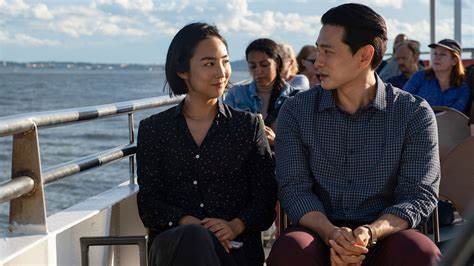
Many have likened A24’s latest to Richard Linklater’s “Before” Trilogy. And the similarities lie in their central conceits, both works follow two people meeting many years after forming a romantic bond. Aspects of Past Lives reminded me of ‘Before Sunset’ in its contemplation of meeting someone you haven’t really moved on from. Ethan Hawke once said that “the first film (Before Sunrise) is about what could be; the second (Before Sunset) is about what should’ve been. Before Midnight is about what is.” We watch as Past Lives’ Nora (Greta Lee) experiences all of these stages, just not in the way you might think.
Just like with the ‘Before’ trilogy, the film is a rumination on coincidence and the effects of our circumstances. The Korean concept of In-Yun is one that is weaved throughout the film. It refers to the growing connections formed between two people whose roads cross over multiple lifetimes. The more lifetimes shared, the stronger the connection between the two. The film is enamored with this concept and the question of destiny’s role in the little coincidences and connections that make up our daily lives. As characters mention throughout the film, spouses are believed to have met in over 8000 past lifetimes, forming that deep marital bond over millennia. The idea of In-Yun becomes even more poignant in the context of the film as Nora and Hae Sung (Teo Yoo) meet at multiple very different stages of their life, years separating each encounter.
Song’s film isn’t just a romantic story but a story about the immigrant experience and everything that comes with it, from interracial relationships to adapting to a new language. Na Young and Hae Sung grow up together in Seoul and are each other’s first major crush. Days before Na Young’s family plans to move to America, they go on their first date and clearly have strong feelings for one another. But Nora leaves for America and they lose contact. We see Na Young adopt her new American name Nora, learn English, and prepare to adapt to this foreign world. Later on in the film, we hear Nora talk about how she had no one she could cry to as a child in America. Her new world quickly taught her to hide her emotions and not let anyone know when she was feeling awful or confused. It’s a common first generation American immigrant experience to consciously hold back certain parts of yourself to assimilate more comfortably into the American world, and it’s an experience that Song illustrates with specificity and care.
This is a film that lives and dies on its screenplay. While there are fantastic visuals (the cityscapes, the park where young Nora and Hae Sung play, etc.), the movie is anchored by Celine Song’s empathetic, heartbreaking, and occasionally hilarious screenplay. But what struck me the most was what was left unsaid. There are moments throughout the film where Nora and Hae Sung just look at each other, their eyes telling each other more than what can be said with words. It’s in these moments where the two central performances really shine. Though one cannot leave out the wonderful John Magaro, who’s vulnerable, soul-baring turn was my favorite performance from the film. Some of Magaro’s best moments are pretty much wordless, his looks do enough to convey the mix of love, fear, insecurity, care, and discomfort he experiences. Unlike the ‘Before’ trilogy, Past Lives doesn’t really spend moments just lingering with its characters. While Linklater’s films were built on scenes of characters going on philosophical tangents for most of the runtime, we also spent more time really seeing the characters for who they were. It really feels like no moment is wasted. Granted, these are two quite different films and I am not finding fault with Past Lives for failing to be a ‘Before’ copycat but instead just trying to point out that I never really fall in love with Nora and Hae Sung they way I fell in love with Celine and Jesse because we as an audience don’t really get to sit with them and when we do it’s for brief moments. But like with the ‘Before’ trilogy, what they say to each other in these moments together isn’t as significant as their flickering glances, shared stares, and genuine smiles. These moments are what make the best romantic dramas and Past Lives is one of the best romance films of the decade so far, if not the best.
Not much has changed since last month’s predictions. The two biggest developments of the summer so far are the massive amounts of acclaim that have been lauded on Spider-Man: Across the Spider-Verse and Celine Song’s Past Lives. Both will likely remain two of the year’s most beloved come December and while the former is unlikely to eke out anything beyond a Best Animated Feature win, A24’s Past Lives very well could be a Best Picture nominee. Having watched Past Lives, it is definitely accessible and affecting enough to remain in enough Academy members’ hearts come voting time. Outside of Best Picture, expect strong campaigns for Celine Song in Director and Original Screenplay, Greta Lee in Actress, John Magaro in Supporting Actor, and possibly Shabier Kirchner (who also did wonderful work on Steve McQueen’s Lovers Rock) in Cinematography and Grizzly Bear in Original Score.
My most-anticipated films of next month are Oppenheimer and Barbie, both of which have potential to be Picture contenders. Thankfully, we only have to wait three more weeks to see how they are received. If Oppenheimer is even a moderate hit, I think its nomination is secure. It is a biopic from an auteur director with an all-star cast and if it brings audiences, it will be a Picture nominee even if it has a Metascore around 60. Barbie needs to be both a hit and critical success to be a Picture nominee. Yes, it has the power of Gerwig, Robbie, Gosling, and Baumbach behind it but if a comedy wants to receive a Picture nomination, it must be seen as “serious” in some way. Even though 2021’s Don’t Look Up was a comedy it also functioned as a satire on climate change complacency and, as a result, had people around Hollywood championing its “importance”. That’s something Barbie needs and knowing Gerwig, Barbie’s satire (if it ends up going that route) will be a lot more potent than McKay’s thin and toothless attempt at “sociopolitical commentary”.
BEST PICTURE
Killers of the Flower Moon (Apple TV+)
Oppenheimer (Universal)
The Color Purple (Warner Bros.)
Dune: Part Two (Warner Bros.)
Past Lives (A24)
The Zone of Interest (A24)
Maestro (Netflix)
Saltburn (Amazon)
Poor Things (Searchlight)
How Do You Live? (Studio Ghibli)
Could Jump In: Anatomy of a Fall (Neon), Spider-Man: Across the Spider-Verse (Sony), Rustin (Netflix), Napoleon (Apple TV+), Lee (Sky), The Bikeriders (20th Century), The Wonderful Story of Henry Sugar (Netflix), Ferrari (STX), Shirley (Netflix), Next Goal Wins (Searchlight), The Killer (Netflix), Monster (Toho), Asteroid City (Focus), May December (Sky Cinema), A Thousand and One (Focus), The Holdovers (Focus), The Piano Lesson (Netflix), Barbie (Warner Bros.), Wonka (Warner Bros.)
BEST DIRECTOR
Martin Scorsese – Killers of the Flower Moon
Blitz Bazawule – The Color Purple
Jonathan Glazer – The Zone of Interest
Celine Song – Past Lives
Hayao Miyazaki – How Do You Live?
Could Jump In: Yorgos Lanthimos – Poor Things, Christopher Nolan – Oppenheimer, Emerald Fennell – Saltburn, Denis Villeneuve – Dune: Part Two, Ridley Scott – Napoleon, Jeff Nichols – The Bikeriders, Ellen Kuras – Lee, Michael Mann – Ferrari, David Fincher – The Killer, Greta Gerwig – Barbie, Ari Aster – Beau is Afraid, Wes Anderson – The Wonderful Story of Henry Sugar, Todd Haynes – May December, George C. Wolfe – Rustin, Nuri Bilge Ceylan – About Dry Grasses
BEST ACTOR
Colman Domingo – Rustin
Bradley Cooper – Maestro
Leonardo DiCaprio – Killers of the Flower Moon
Michael Fassbender – The Killer
Cillian Murphy – Oppenheimer
Could Jump In: Paul Giamatti – The Holdovers, Adam Driver – Ferrari, Barry Keoghan – Saltburn, Austin Butler – The Bikeriders, Benedict Cumberbatch – The Wonderful Story of Henry Sugar, Anthony Hopkins – One Life, Joaquin Phoenix – Beau is Afraid, Andre Holland – The Actor, Christian Friedel – The Zone of Interest, Matt Damon – Air, Song Kang-Ho – Cobweb, Andrew Scott – Strangers, Timothee Chalamet – Wonka
BEST ACTRESS
Annette Bening – Nyad
Kate Winslet – Lee
Natalie Portman – May December
Sandra Huller – Anatomy of a Fall
Greta Lee – Past Lives
Could Jump In: Regina King – Shirley, Carey Mulligan – Maestro, Fantasia Barrino – The Color Purple, Emma Stone – Poor Things, Margot Robbie – Barbie, Zendaya – Challengers, Vanessa Kirby – Napoleon, Teyana Taylor – A Thousand and One, Alicia Vikander – Firebrand, Saoirse Ronan – The Outrun, Jessica Chastain – Memory, Sandra Huller – The Zone of Interest
BEST SUPPORTING ACTOR
Robert De Niro – Killers of the Flower Moon
Tom Hardy – The Bikeriders
Colman Domingo – The Color Purple
John Magaro – Past Lives
Jesse Plemons – Killers of the Flower Moon
Could Jump In: Willem Dafoe – Poor Things, Samuel L. Jackson – The Piano Lesson, Glynn Turman or Jeffrey Wright – Rustin, Louis Gossett Jr. – The Color Purple, Richard E. Grant – Saltburn, Lakeith Stanfield – The Book of Clarence, Andy Samberg – Lee, Paul Mescal – Strangers, Josh O’Connor or Mike Faist – Challengers, Peter Sarsgaard – Memory, Jude Law – Firebrand, Mahershala Ali – Leave the World Behind, Glenn Howerton – BlackBerry (I can hope)
BEST SUPPORTING ACTRESS
Lily Gladstone – Killers of the Flower Moon
Taraji P. Henson – The Color Purple
Danielle Brooks – The Color Purple,
Rosamund Pike – Saltburn
Julianne Moore – May December
Could Jump In: Jodie Foster – Nyad, Tilda Swinton – The Killer, Jodie Comer – The Bikeriders, Penelope Cruz – Ferrari, Audra McDonald – Rustin, Claire Foy – Strangers, Margaret Qualley – Poor Things, Carey Mulligan – Saltburn, Helena Bonham Carter – One Life
BEST ORIGINAL SCREENPLAY
Past Lives
Saltburn
Drive-Away Dolls
Rustin
May December
Could Jump In: Maestro, Asteroid City, The Holdovers, Beau is Afraid, Monster
BEST ADAPTED SCREENPLAY
Killers of the Flower Moon
Poor Things
The Bikeriders
How Do You Live?
The Zone of Interest
Could Jump In: The Color Purple, Oppenheimer, The Wonderful Story of Henry Sugar, Strangers, Lee, Dune: Part Two
BEST ANIMATED FEATURE
How Do You Live?
Spider-Man: Across the Spider-Verse
Elemental
Wish
Teenage Mutant Ninja Turtles: Mutant Mayhem
Could Jump In: Migration, Suzume
BEST PRODUCTION DESIGN
Poor Things
Dune: Part Two
Saltburn
Oppenheimer
Napoleon
Could Jump In: The Wonderful Story of Henry Sugar, Killers of the Flower Moon, The Color Purple, The Zone of Interest, Wonka,
BEST CINEMATOGRAPHY
Dune: Part Two
Killers of the Flower Moon
Saltburn
Poor Things
Napoleon
Could Jump In: Oppenheimer, The Color Purple, The Wonderful Story of Henry Sugar, Maestro, The Killer, The Zone of Interest
BEST COSTUME DESIGN
Dune: Part Two
Poor Things
Saltburn
The Color Purple
Barbie
Could Jump In: The Wonderful Story of Henry Sugar, Napoleon, Wonka, Blitz, Lee
BEST FILM EDITING
Dune: Part Two
Killers of the Flower Moon
The Killer
Ferrari
Oppenheimer
Could Jump In: The Color Purple, Napoleon, Blitz, Maestro, Poor Things
BEST MAKEUP & HAIRSTYLING
Maestro
Barbie
Dune: Part Two
Poor Things
Wonka
Could Jump In: The Color Purple, Ferrari, Napoleon, The Wonderful Story of Henry Sugar, The Bikeriders
BEST SOUND
Dune: Part Two
Oppenheimer
Ferrari
The Color Purple
Maestro
Could Jump In: Mission: Impossible – Dead Reckoning Part One, Wonka, The Marvels. Barbie
BEST VISUAL EFFECTS
Dune: Part Two
Transformers: Rise of the Beasts
Guardians of the Galaxy Vol. 3
Oppenheimer
Wonka
Could Jump In: Barbie, The Little Mermaid, The Marvels, Indiana Jones and the Dial of Destiny, Blue Beetle
BEST ORIGINAL SCORE
Dune: Part Two
How Do You Live?
Oppenheimer
The Killer
Asteroid City
Could Jump In: Elemental, The Zone of Interest, Barbie, Challengers, Lee, Killers of the Flower Moon
The most acclaimed Spanish filmmaker since Victor Erice, Pedro Almodovar’s distinctively queer and vibrant filmography makes him one of the most unique, prolific, and consistently exciting filmmakers of the last 40 years. From his darkly funny earlier fare like What Have I Done to Deserve This? and Women on the Verge of a Nervous Breakdown to his more recent emotionally-devastating dramas like Talk to Her and Pain and Glory, Almodovar has never fit into any easy labels. All About My Mother is his magnum opus, merging his distinctive humor, melodrama, and his desire to tackle serious issues. This is a moving and affecting portrait of motherhood, love, and what it means to be family.
Where to Watch: Rent or Buy
And Then We Danced (2019)
‘And Then We Danced’ (Music Box)
A powerfully acted and dazzlingly emotional coming-of-age story set in the world of competitive dancing, Levan Akin’s And Then We Danced is an honest love story set in the Georgian capital of Tbilisi. The dance sequences are a wonder to behold, they’re bursting with passion and energy. Levan Gelbakhiani delivers a phenomenal central performance in this criminally underseen film that you’ll feel in your heart long after the credits roll.
Where to Watch: Prime Video, Tubi, Kanopy, Mubi
The Birdcage (1996)
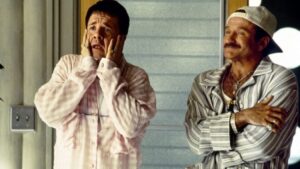
‘The Birdcage’ (United Artists)
Led by gut-bustingly funny and empathetic work from co-leads Nathan Lane and Robin Williams, Mike Nichols’ The Birdcage is an uplifting tale that sees a gay couple attempt to put on a straight facade when meeting the ultra-conservative parents of their son’s fiancee. This Elaine May-written movie is still one of the rare mainstream Hollywood films to feature a happy gay couple at the story’s forefront.
Where to Watch: Paramount+, PlutoTV, The Roku Channel, Tubi
The Bitter Tears of Petra von Kant (1972)
‘The Bitter Tears of Petra von Kant’ (New Yorker Films)
In the 13 years he was making feature films before his untimely death from a drug overdose at 37, Rainer Werner Fassbinder constructed one of the greatest filmographies ever. While he ventured into more experimental fare with films such as World on a Wire and Berlin Alexanderplatz, Fassbinder’s bread and butter was the sumptuous Sirkian melodrama and The Bitter Tears of Petra von Kant is one of his best, incorporating a Bergmanesque story into a story of an arrogant and self-centered fashion designer who plunges into a love affair with a young woman.
Where to Watch: Max, The Criterion Channel
Bound (1996)
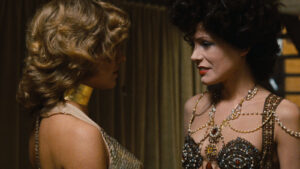
;Bound’ (Gramercy)
While they broke out into the mainstream with The Matrix, many film fans first heard about The Wachowskis from their neo-noir crime thriller Bound. Stylish and with a tight and captivating screenplay, this is the Wachowskis best film outside of the one that made them household names. Gina Gershon, Jennifer Tilly, and Joe Pantoliano star in this film that follows a woman and her lover as they attempt to take millions of dollars from the mob.
Where to Watch: Prime Video, Paramount+
But I’m a Cheerleader (1999)
‘But I’m a Cheerleader’ (Lionsgate)
This movie was such a welcome surprise. I wasn’t expecting a heartwarming, hilarious, and compassionate satire bursting with color and vibrancy but that is exactly what Jamie Babbit’s But I’m a Cheerleader is. You might not think that a film largely set in a gay conversion camp can be raucously funny, but Babbit strikes the tone well, effectively skewering societal heteronormativity and homophobia while maintaining the film’s sense of campy fun.
Where to Watch: Prime Video, The Roku Channel, The Criterion Collection, Tubi, PlutoTV
Carol (2015)
‘Carol’ (The Weinstein Company)
Anchored by phenomenal performances from Cate Blanchett and Rooney Mara, this adaptation of a Patricia Highsmith novel follows the aspiring photographer Therese as she falls in love with the older and wealthier Carol. Every aspect of this film is firing on all cylinders, Edward Lachman’s lavish cinematography, Carter Burwell’s jazzy and affecting score, Phyllis Nagy’s wonderfully romantic yet melancholy screenplay, and, of course, Todd Haynes’ exquisite direction.
Where to Watch: Netflix, Kanopy
C.R.A.Z.Y. (2005)
‘C.R.A.Z.Y.’ (Samuel Goldwyn)
A movie about coming-out that you can (probably) watch with your parents, Quebecois Jean-Marc Vallee’s C.R.A.Z.Y. is a thoroughly entertaining coming-of-age film about a young man discovering his identity under the pressure of his conservative family. The film also works as a wonderful time capsule, capturing the 60s and 70s with detail and a fantastic soundtrack that includes David Bowie, The Cure, Pink Floyd, The Rolling Stones, and Elvis Presley.
Where to Watch: Max, Kanopy
Farewell My Concubine (1993)
‘Farewell, My Concubine’ (Miramax)
An epic romantic melodrama set in mid 20th century China, you may need some knowledge of Chinese history to truly appreciate this film. But even without that knowledge, Farewell, My Concubine is a lavish production, exquisitely crafted on all technical fronts. Gong Li is absolutely brilliant in this film as the titular concubine and Leslie Cheung and Zhang Fengyi are fantastic as well.
Where to Watch: Rent/Buy
The Handmaiden (2016)
‘The Handmaiden’ (Amazon)
Sumptuous period detail and seductive performances come together in this deliciously entertaining erotic thriller from ‘Oldboy’ director Park Chan-Wook. The Handmaiden is one of the best-looking period films of the past 10 years with cinematographer Chung-Hoon Chung, costume designer Jo Sang-Gyeong, and production designer Ryu Seong-Hie working in tandem to capture early 20th century Japanese luxury in awe-inspiring fashion. Park’s direction is at his best since Oldboy, thrilling his audience with the precision of a master.
Where to Watch: Prime Video, FilmBox
Happy Together (1997)
‘Happy Together’ (Kino International)
It’s reductive and I’m in no way trying to bring down what is an impeccable filmography but the cinema of Wong Kar-Wai can be grouped into two categories, passionate romantic dramas and neo-noir crime dramas. Some merge both styles such as Chungking Express and Fallen Angels. But like Wong’s magnum opus In the Mood For Love, Happy Together fits wholly into the former category and is a pure romantic drama about isolation, marginalization, and codependency. The late Leslie Cheung and Wong regular Tony Leung give fantastic performances as the central couple.
Where to Watch: Max, The Criterion Collection
Hedwig and the Angry Inch (2001)
‘Hedwig and the Angry Inch’ (Fine Line)
An exhilarating glam rock opera musical, Hedwig and the Angry Inch is director, writer, and star John Cameron Mitchell’s bold, imaginative, and genuinely touching portrait of Hedwig, a trans punk rock singer from Berlin who tells the story of her life, one of love and betrayal, through her songs. Visually audacious and with a fantastic soundtrack, Mitchell’s film is full of irresistible energy and remarkable charm.
Where to Watch: Rent/Buy
Joyland (2022)
‘Joyland’ (Oscilloscope)
Executive produced by Malala Yousafzai, Riz Ahmed, and Ramin Bahrani among others, Saim Sadiq’s Joyland follows the sensitive Haider who finds a job at a burlesque theater and falls in love with its central star, a trans woman named Biba. This winner of the most recent Spirit award for Best International Film was banned in its home country of Pakistan for its positive depiction of a transgender woman. This is a stunningly-shot, deeply humanistic film that deserves to be more widely recognized (and brought to streaming!).
Where to Watch: N/A
The Long Day Closes (1992)
‘The Long Day Closes’ (Sony Pictures Classics)
An atmospheric and lyrical coming-of-age story about a boy’s burgeoning homosexuality, Catholic faith, and relationship with his mother, The Long Day Closes is one of (very) British auteur Terence Davies’ best features, functioning as an autobiographical examination of the truths that can reside in memory. Wonderfully shot and at times surreal with its imagery and rejection of conventional notions of plot, Davies’ film is a singular experience resplendent with a love for cinema and music.
Where to Watch: The Criterion Collection
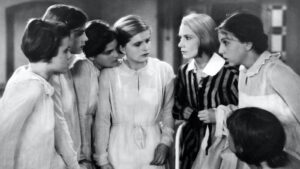
Madchen in Uniform (1931)
‘Madchen in Uniform’ (Filmchoice)
This is by far the oldest film on this list, and you might be surprised to see that a film from 1931 has mostly held up in terms of its LGBTQ+ representation but clearly Leontine Sagan and her crew were decades ahead of their time. This is a fantastic coming-of-age film told through stunning German Expressionist cinematography and unexpectedly naturalistic performances. While the teacher-student relationship at the center of the story is a significant issue, this film is a celebration of female companionship, queer identity, and resistance against oppressive authority that also featured the second cinematic lesbian kiss.
Where to Watch: Plex
Maurice (1987)
‘Maurice’ (Cinecom)
One of the best films produced by the Ismail Merchant-James Ivory partnership, Maurice is a lushly photographed period piece from the late 20th century masters of the literate Hollywood period romance. Less successful on the awards circuit than its straight Merchant-Ivory cousins Remains of the Day, A Room With a View, and Howards End, this is a criminally overlooked tale of gay love and repression that still moves over a century after E.M. Forster first put the story of Maurice and Clive on page.
Where to Watch: Kanopy, Mubi
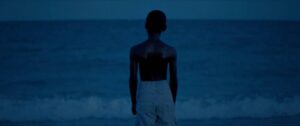
Moonlight (2016)
‘Moonlight’ (A24)
Probably the most acclaimed American film of the last ten years, Barry Jenkins’ unquestionable masterpiece Moonlight is a masterclass in everything from empathetic filmmaking to subtle yet devastating acting. Moonlight is the coming-of-age story of Chiron, a young Black man wrestling with his identity, sexuality, and purpose. Barry Jenkins and cinematographer James Laxton’s images are pure visual poetry accentuated by Nicholas Britell’s somber, atmospheric strings. It’s a wonderful movie and an absolute must-see for anyone who considers themselves a fan of film.
Where to Watch: Max, Kanopy, DirecTV
My Own Private Idaho (1991)
‘My Own Private Idaho’ (Fine Line)
Led by two compelling lead performances from River Phoenix and Keanu Reeves, My Own Private Idaho is one of Gus Van Sant’s most exceptional features that follows two hustlers on the road to survival and self discovery. The film is one of the most important in the New Queer Cinema canon, a movement led by queer American filmmakers during the HIV/AIDS crisis that was at its peak from the late 80s to the mid 90s. Gus Van Sant, Todd Haynes, Gregg Araki, Cheryl Dunye, and Marlon Riggs (all of whom have films included on this list) were some of the most significant contributors to this movement.
Where to Watch: Rent/Buy
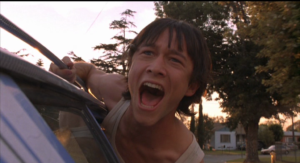
Mysterious Skin (2004)
‘Mysterious Skin’ (TLA)
Gregg Araki made multiple films centered around the queer experience, including acclaimed works like Nowhere, The Doom Generation, and The Living End, but the devastating Mysterious Skin is widely considered to be his masterpiece. Infamously harrowing yet at times beautiful and incredibly affecting, Araki’s film is not for those unprepared to see a story that deals with trauma and abuse in a way that stays with you. Joseph Gordon-Levitt and Brady Corbet give some of the best performances of their careers here.
Where to Watch: The Criterion Collection
Paris is Burning (1990)
‘Paris is Burning’ (Off White)
No other documentary I’ve seen feels so vivid and full of life. Paris is Burning captures the lives and stories surrounding the New York ballroom scene of the 80s and does so with the utmost interest and care for every person who is a part of it. Real-life figures like Pepper Lebeija, Dorian Corey, Octavia St. Laurent, and Venus Xtravaganza start to feel like friends by the end of the film’s speedy 78 minutes. While it has its issues, at its core Paris is Burning is an effortlessly lovable celebration of ballroom culture that has proved to be incredibly influential.
Where to Watch: Max, The Criterion Collection
Portrait of a Lady on Fire (2019)
‘Portrait of a Lady on Fire’ (Neon)
Every 10 years, the British Film Institute conducts the Sight and Sound poll, asking critics around the world for their takes on the greatest films ever made. In 2022, “Portrait of a Lady on Fire” was ranked at number 30, the highest ranking for any film from the 2010s. This profoundly emotional period piece follows the romance of two women, Heloise and Marianne, as they spend a week together on an isolated island off the coast of France. With accolades from the Cannes Film Festival, Cesar Awards and European Film Awards, director Celine Sciamma has earned her title as one of, if not the most, acclaimed female filmmakers of her generation. One of the most gorgeous films I’ve seen, both in photography and thematics, this is one of my personal all-time favorites.
Where to Watch: Hulu, Kanopy
Pride (2014)
‘Pride’ (CBS)
A feel-good activism story brimming with humor and heart, Matthew Warchus’ Pride is a touching film set during the conservative Thatcher era in Britain as gay activists work to aid miners during the U.K. miner strike of 1984-85. The cast is stacked featuring phenomenal British actors like Bill Nighy, Imelda Staunton, Paddy Considine, Dominic West, and George MacKay who are all great in their respective roles. There are not many fiction films about activism as good as this.
Where to Watch: Showtime, DirecTV
Straight Up (2019)
‘Straight Up’ (Strand)
A light, fun screwball rom-com, James Sweeney’s debut is a fresh take on traditional romantic comedy tropes. The film lives and dies on the chemistry of its two leads Sweeney and Katie Findlay, two characters who long for love but find something standing in the way of them being a perfect couple. Reminiscent of classic rom coms like His Girl Friday and When Harry Met Sally in its witty banter, Sweeney translates the feel of those movies to a new generation with different preoccupations.
Where to Watch: Netflix, Kanopy
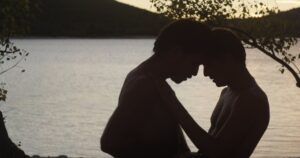
Stranger by the Lake (2013)
‘Stranger by the Lake’ (Strand)
Fantastic cinematography from Claire Mathon, an atmosphere filled with dread, and deft direction from Alain Guiraudie come together in Guiraudie’s Stranger by the Lake. This is a film about risk and passion, addiction and attraction led by captivating turns from Pierre Deladonchamps, Christophe Paou, and Patrick d’Assumcao as summer occupants of a lakeside gay cruising beach.
Where to Watch: Kanopy
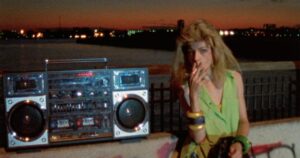
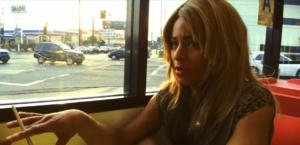
Tangerine (2015)
‘Tangerine’ (Magnolia)
Bursting with raw energy, Tangerine is so much damn fun. Powered by two alternatingly hilarious, tender, and passionate performances from Kitana Kiki Rodriguez and Mya Taylor, Tangerine is a whirlwind of a film that takes you on the journey of hookers Sin-Dee and Alexandra who scour Los Angeles looking for Chester, the pimp that cheated on Sin-Dee. The film was shot on iPhones and consists of mostly non-actors and first-time actors, accentuating the film’s realism. But don’t be fooled by director Sean Baker’s realist aesthetic, this is one of the most unabashedly entertaining indie dramas in recent years.
Where to Watch: Max, Hoopla, Kanopy, DirecTV
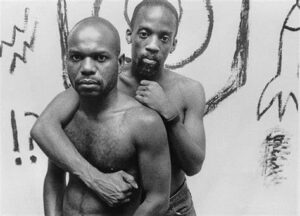
Tongues Untied (1989)
‘Tongues Untied’ (Frameline)
A film based on the thesis that Black men loving other Black men is a revolutionary act, Marlon Riggs’ Tongues Untied is an essential film both in its social and political content. This is a film built from the art of not only Marlon Riggs but numerous Black gay voices from poets to activists. It’s an incredible film made with an infectious amount of passion that depicts intersectionality in a way that makes its audience think and feel deeply.
Where to Watch: The Criterion Collection, Kanopy, Ovid
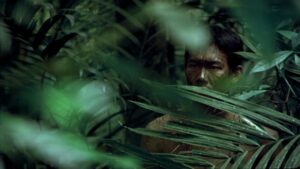
Tropical Malady (2004)
;Tropical Malady’ (Strand)
Apichatpong Weerasethakul has a lyrical cinematic style that is completely his own. His cinema is deeply mystical, atmospheric, and aware of nature. Split into two halves, Weerasethakul’s best film Tropical Malady is both a wonderfully shot gay romance and a story steeped in Thai legends, populated by shamans, surreal magical realism, and mystical forces. It’s a film that lives completely on its own wavelength and if you share that wavelength, you will fall in love with it.
Where to Watch: Kanopy
The Watermelon Woman (1996)
‘The Watermelon Woman’ (First Run)
This comedy follows a Black lesbian filmmaker named Cheryl (director Cheryl Dunye playing herself) who dives into the life of an actress billed as the Watermelon Woman who was known for playing “mammy” archetypes in the 1930s. Cheryl simultaneously looks for love in this hilarious rom-com mockumentary, which sits at the intersection of race, sex, history, love, and queerness.
Where to Watch: Showtime, Kanopy, DirecTV, Fandor
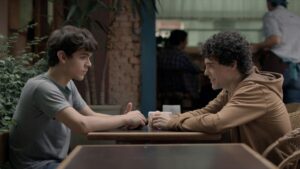
The Way He Looks (2014)
‘The Way He Looks’ (Strand)
Endearingly cute and wonderfully romantic, Daniel Ribeiro’s The Way He Looks is an adorable Brazilian coming of age story about a blind child finding first love. This touching film unabashedly wears its heart on its sleeve and features a great soundtrack, charming performances, and a genuine sense of empathy for its characters.
Where to Watch: Kanopy
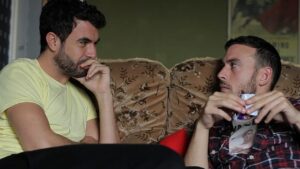
Weekend (2011)
‘Weekend’ (IFC)
As intimate and sensitive as romantic dramas can be, Andrew Haigh’s phenomenal feature Weekend is a genuine examination of sex and love in modern gay relationships. It’s an effortlessly endearing film that’s at times sexy, hilarious, thoughtful, and critical. Both Tom Cullen and Chris New give vulnerable naturalistic performances, their character’s flaws and preoccupations bared in full view to the audience.
Where to Watch: AMC+, The Criterion Collection, Tubi, Kanopy, DirecTV, PlutoTV
Justine Triet became just the third female director to win the Palme D’Or with ‘Anatomy of a Fall’ taking Cannes’ top prize. Critical darling ‘The Zone of Interest’ was awarded with the second prize and we will very likely be seeing both films pop up again and again later in the year when awards season kicks into full gear. Alice Rohrwacher’s ‘La Chimera’ and Todd Haynes’ ‘May December’ left the Croisette without prizes while Aki Kaurismaki’s ‘Fallen Leaves’ won the Cannes Jury Prize.
Here are the awards and their winners:
Palme d’Or Anatomy of a Fall, dir: Justine Triet
Grand Prize The Zone of Interest, dir: Jonathan Glazer
Best Director
Tranh Anh Hung, The Pot-au-Feu
Jury Prize Fallen Leaves, dir: Aki Kaurismaki
Best Screenplay
Yuji Sakamato, Monster
Best Actress
Merve Dizdar, About Dry Grasses
Best Actor
Koji Yakusho, Perfect Days
Camera d’Or Inside the Yellow Cocoon Shell, dir: Thien An Pham
Short Film Palme d’Or 27, dir: Flóra Anna Buda
Special Mention: Far, dir: Gunnur Martinsdottir Schluter